
AI-Driven Experimental
Design Solutions
Turbocharge your R&D with Atinary’s no-code AI platform. Optimize experimental design and outcomes, and reduce trial-and-error—no programming required.









R&D Bottlenecks Holding Back Innovation?

Repetitive, manual experimentation slows progress and wastes resources.

Difficulty optimizing complex,
multi-parameter reactions and experiments without in-house AI/ML expertise.
multi-parameter reactions and experiments without in-house AI/ML expertise.

Limited access to advanced optimization tools makes scaling breakthroughs and reproducibility difficult.
The Atinary SDLabs Solution for AI-driven
Experimental Design
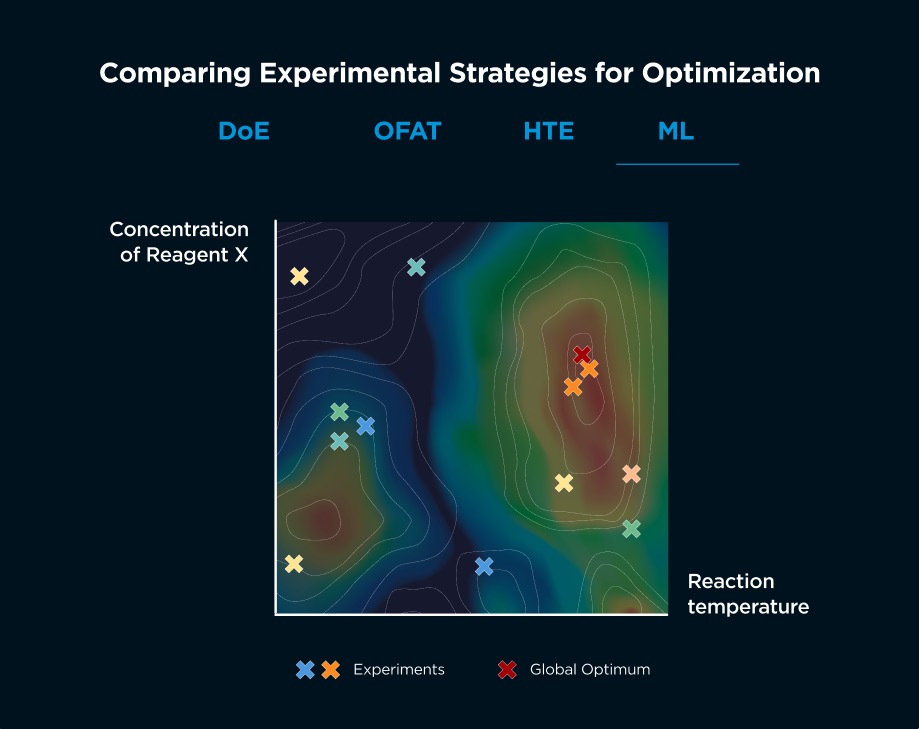
Traditional approaches like OFAT, classical DoE, and high-throughput experimentation are familiar but often slow, resource-intensive, and limited in exploring complex experimental spaces. SDLabs leverages AI and machine learning to go beyond these methods—intelligently recommending experiments, learning from results, and accelerating discovery with fewer trials.
Why Choose SDLabs?
Pain Point
How Atinary SDLabs Solves It
Why It Matters to You
Limited AI/ML expertise in-house
No-code, user-friendly platform built by scientists for scientists
Democratizes AI across teams without requiring specialized skills
Complex multi-parameter experiments and large search spaces
Global, multi-objective optimization, Bayesian-guided recommendations
Find optimal solutions faster, even in highly complex chemical or process systems
Disconnected lab systems and fragmented data
Seamless integration with lab automation, robotics, LIMS, and ELNs
Streamlines workflows, reduces manual entry and errors, improves data quality
Risk of data breaches or compliance failure
SOC-2, HIPAA, GDPR compliant, enterprise-grade security and privacy
Safeguards IP, protects sensitive research
Traditional DoE software limitations
Proprietary ML algorithms surpasses conventional legacy tools in speed, accuracy, and scale
Achieve more with fewer resources—10x faster optimization demonstrated
Core Innovations
What Sets Us Apart

Scientists, chemists, and researchers in pharma, biotech, cosmetics, flavors and fragrances, materials science, and chemistry.

R&D, innovation, and process teams seeking digital transformation and looking to move beyond manual, trial-and-error experimentation.

Lorem ipsum dolor sit amet, consectetur adipiscing elit, sed do eiusmod tempor incididunt ut labore et dolore magna aliqua.
Lorem ipsum dolor sit amet, consectetur adipiscing elit, sed do eiusmod tempor incididunt ut labore et dolore magna aliqua.
What Does this Mean for R&D Leaders, Innovation Teams, and Lab Automation Specialists?

For R&D Directors
- Accelerate innovation cycles with real-time insights and AI-driven optimization.
- Quantify ROI with detailed analytics and benchmarking.
- Simplify resource planning with automated workflows and reduced manual labor.
For Hands-On Scientists
- Skip the coding—design and optimize experiments in minutes.
- Explore and exploit your complex experimental design space more effectively.
- Seamless integration with existing workflows, whether automated or manual.
- Boost lab productivity and throughput, focus on discovery and innovation.
- Instantly access centralized experiment data and real-time analytics.

For IT/Compliance
- Available API integration to data sources, robotics and existing hardware.
- SOC-2, HIPAA, and GDPR compliance out of the box.
- Maintain full control of sensitive data and intellectual property.
How It Works
AI-Driven Closed Loop
02 AI DECISIONS
01 DESIGN EXPERIMENT
05 AI/ML TRAINING

03 RUN EXPERIMENTS
04 DATA ANALYTICS

01 DESIGN EXPERIMENT
02 AI DECISIONS
03 RUN EXPERIMENTS
04 DIGITAL LIBRARIES
Build high-quality, ML-ready datasets
05 DATA ANALYTICS
Connect Every Part of Your Lab—From Data to Devices
Atinary’s SDLabs platform is purpose-built to unify your entire R&D workflow, breaking down data silos and
enabling a truly digital, automated, and collaborative laboratory.
enabling a truly digital, automated, and collaborative laboratory.
LIMS Compatibility
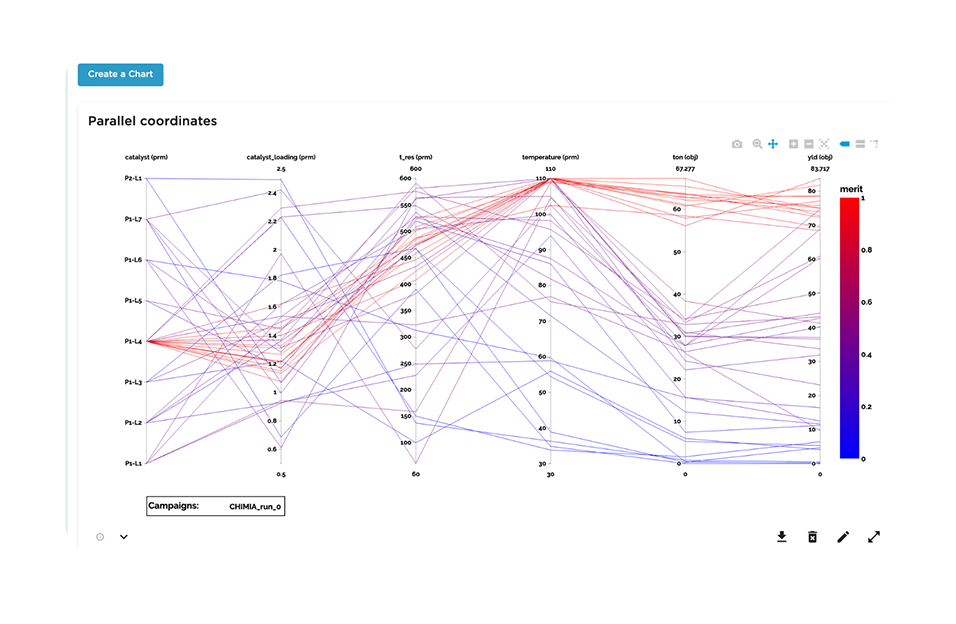
- Instantly connect SDLabs with your Laboratory Information Management System (LIMS). All experiment data—conditions, results, metadata—is automatically captured and accessible in one secure, searchable hub. No more manual data transfers, lost files, or fragmented records.
- Example: Chemists can retrieve or analyze any historical experiment in seconds, supporting audits, compliance, and faster innovation.
Robotics & Automation Hardware
- Seamlessly link SDLabs to lab robots, liquid handlers, and reactors for a closed-loop, fully autonomous experimentation process.
Real-World Integrations
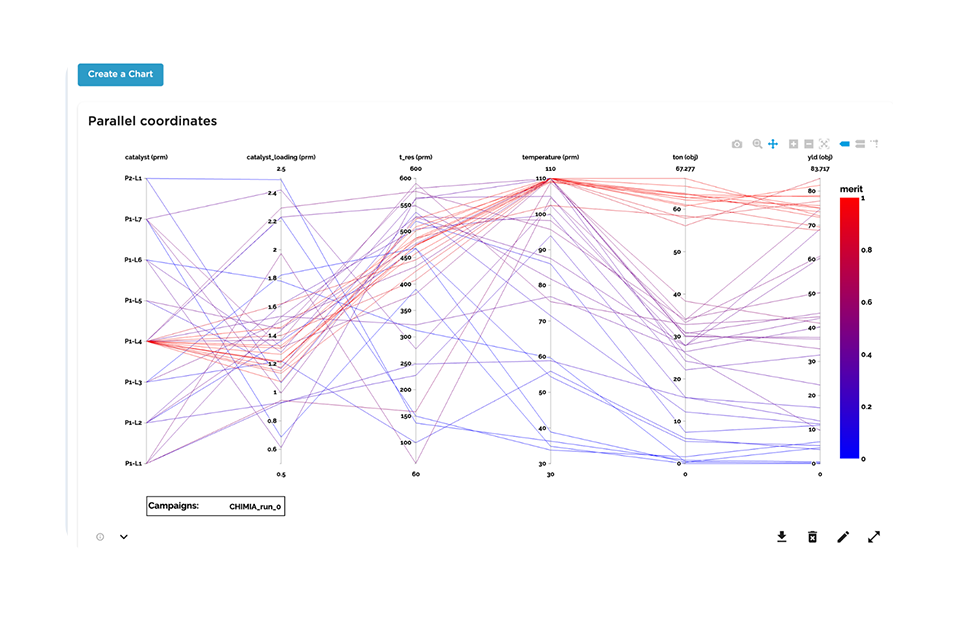
- IBM’s RoboRXN/Chemspeed: AI algorithms in SDLabs send experiment designs directly to the robot; results are automatically fed back for instant re-optimization.
- ETH Zurich Catalyst Optimization: Robotic platforms execute batches of 24 experiments; results sync with SDLabs for next-iteration planning—no manual intervention.
- Oligonucleotide Synthesis: SDLabs supports integration with Chemspeed and Unchained Labs robots, streamlining complex workflows.
- ViperLab Project: Robotic platforms, guided by SDLabs’ Falcon algorithm, optimize perovskite solar cell fabrication—demonstrating Atinary’s impact on advanced materials R&D.
Unified, ML-Ready Data
- SDLabs eliminates information silos—every data point from every experiment is stored, organized, and ready for analysis or machine learning. This makes knowledge sharing across teams effortless and ensures robust, reproducible science.
Reproducibility & Audit Trails
- Automatic, immutable logging of every experiment’s conditions, parameters, and results—critical for regulatory compliance and confident, repeatable discoveries.
No-Code to Pro-Code
- While SDLabs empowers chemists with its no-code interface, advanced users and IT teams can leverage robust APIs and SDKs for custom integrations, automated workflows, or linking with legacy systems.
- Academic researchers can access free tools like the Scientia API to connect their own data sources and accelerate collaboration.
Future-Proof Compatibility
- SDLabs is designed to evolve with your lab—whether you’re adding new robotics, upgrading LIMS, or developing proprietary workflows.
Compliance-Ready
- SDLabs is built with robust data security controls, including encryption, access management, and audit trails, supporting global privacy regulations (GDPR, CCPA, etc.).
IP Protection
- Your proprietary formulations and research data is always encrypted.
Cloud Deployment
- Flexible options to meet your IT and compliance requirements.
What it means:
Innovate with confidence—knowing your data, IP, and customer privacy are safeguarded at every step.
Ready to see how SDLabs can fit seamlessly into your lab ecosystem?
Testimonials
What they say about us
“… To accelerate catalyst development, we can now combine artificial intelligence and robotics, rationalizing the screening of chemical space and increasing the throughput and reproducibility of the experimental data. This groundbreaking approach achieves in weeks what traditionally took decades…”
“We are pleased to announce that we are collaborating with Atinary Technologies on leveraging their proprietary AI‑driven platforms in Firmenich R&D laboratories. Artificial intelligence, machine learning and the cutting‑edge digital technology behind self‑driving labs are providing new opportunities to speed and enhance our research and development. By combining Firmenich’s scientific expertise with Atinary’s Machine Learning algorithm, Falcon, and the SDLabs® software platform, we are accelerating process optimization towards industrialization of key ingredients.”
dsm‑firmenich
“This partnership brings together our complementary expertise, paving the way for innovative AI solutions poised to transform pharmaceutical R&D and accelerate drug discovery. Through this collaboration, Takeda will leverage Atinary’s leading AI Self‑Driving Labs technology, which, combined with its expertise in R&D and drug discovery, aims to create a more robust and efficient drug development process, ultimately benefiting patients worldwide.”
Takeda
Customer Stories
- All
- Pharma
- Cosmetics and Fragrances
- CDMO
- Biotech
-

Atinary’s AI platform accelerates hydroformylation R&D, optimizing catalysts, cutting Rhodium…
-
Integrating Atinary’s SDLabs platform for AI-driven HTE to maximize yields…
-

Integrating Atinary’s SDLabs platform for AI-driven HPLC workflows in analytical…
See More