
Self-Driving Labs® Technologies
Atinary pioneered Self-Driving Labs® technologies, bringing artificial intelligence into the physical world of scientific R&D labs. Since 2019, Atinary has built the core technology that enables human researchers to deploy machine learning integrated with robots to learn, adapt, and optimize experiments autonomously.









“Self-Driving Labs are about bringing AI into contact with reality to eliminate R&D bottlenecks. By closing the loop between experiment design and physical execution,
we handle the manual repetition so that scientists can focus on their imagination, creativity, and the science itself.”
we handle the manual repetition so that scientists can focus on their imagination, creativity, and the science itself.”
~ Hermann Tribukait, Co-Founder and CEO, Atinary Technologies
Atinary’s AI platform, SDLabs, allows scientists to leverage their knowledge with machine-learning algorithms in under two hours of onboarding, without any coding or AI expertise.
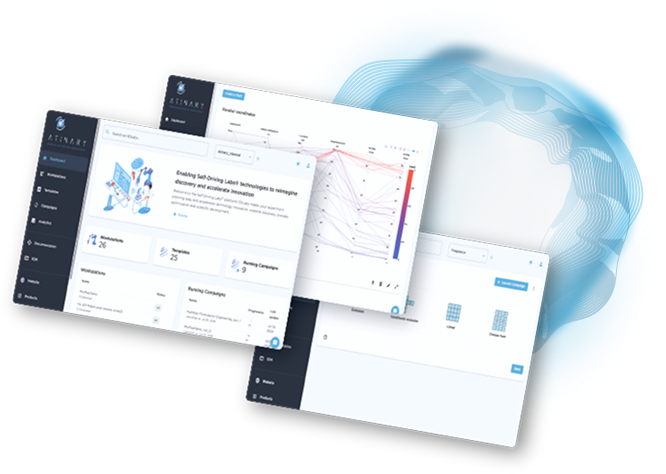
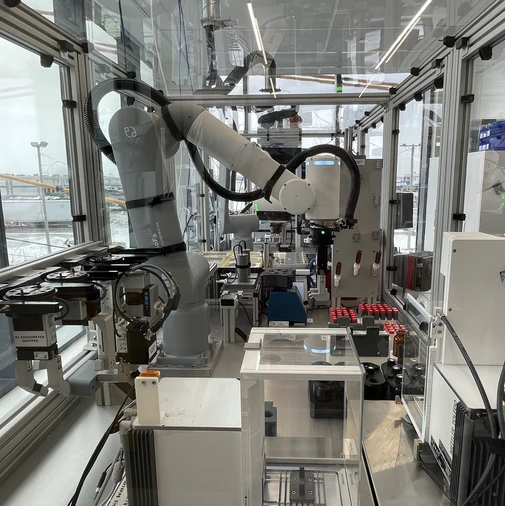
In 2021, Atinary demonstrated this vision by building its first in-house Self-Driving Lab prototype. Since then, Atinary has partnered with leading academic institutions and global industrial innovators to deploy SDLabs in R&D laboratories worldwide.
Today, Atinary is scaling this vision with its own state-of-the-art Self-Driving Labs in Boston, MA, designed to make human imagination the bottleneck in discovery.
Atinary’s Self-Driving Labs® technologies seamlessly integrate AI, robotics, automation, and human expertise into a closed-loop system that autonomously designs, executes, and learns from experiments.
Orchestrated by the SDLabs AI platform, these Physical AI systems accelerate optimization and scientific discovery by orders of magnitude, delivering faster results, better performance, and compounding data advantages, while allowing scientists to focus on science, insight, and innovation rather than manual experimentation.
Orchestrated by the SDLabs AI platform, these Physical AI systems accelerate optimization and scientific discovery by orders of magnitude, delivering faster results, better performance, and compounding data advantages, while allowing scientists to focus on science, insight, and innovation rather than manual experimentation.
Origin story
From vision to category creation
The origin of Atinary and Self-Driving Labs goes back to 2016, when Co-Founder and CEO Dr. Hermann Tribukait co-authored and led the Innovation Challenge on Clean Energy Materials (IC6) of the global initiative Mission Innovation.
The first major event gathered 55 leading scientists, including Co-Founder and CTO Dr. Loic Roch, and a total of 133 participants from 18 countries for four days to answer a single question:
The first major event gathered 55 leading scientists, including Co-Founder and CTO Dr. Loic Roch, and a total of 133 participants from 18 countries for four days to answer a single question:
2016
Mission Innovation IC6
55
Leading scientists
18
Countries represented
The challenge
How do we accelerate materials discovery by orders of magnitude?
The answer
Integrate AI, robotics, and the power of computing with human scientists in an autonomous, closed-loop R&D system that continuously designs, executes, and learns from experiments.
With this mission in mind, we developed Self-Driving Labs® technologies. Coined by Atinary’s founders, Self-Driving Labs has since become a widely adopted framework for AI-driven experimentation across academia and industry.
What is a Self-Driving Lab?
Self-Driving Labs (SDLs) automate the full Design–Make–Test–Analyze-Learn (DMTA-L) cycle by integrating AI, robotics, laboratory automation, and human expertise into a closed loop.
Unlike traditional R&D that relies on manual trial-and-error, Self-Driving Labs:
Self-Driving Labs represent the next frontier of AI: Physical AI in R&D labs, where AI and robotics augment humans to accelerate R&D and bring better materials and molecules to market faster.
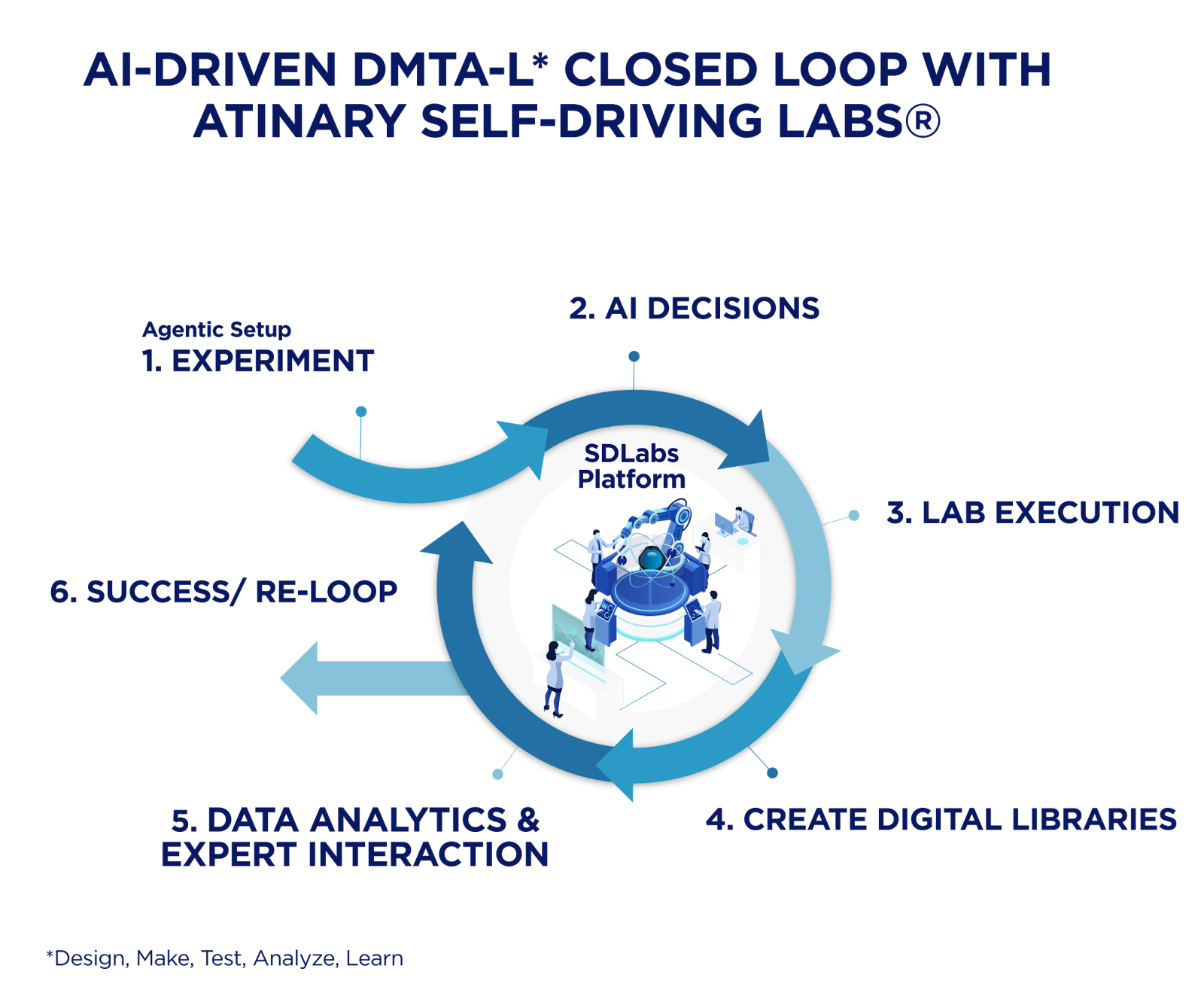
Inside Atinary’s Self-Driving Labs and the DMTA-L Loop

SDLabs AI platform
Intelligence layer
Designs the next best experiment using advanced machine learning and Bayesian optimization.
Impact: Faster, smarter exploration of complex chemical and parameter spaces.
Robotics & AI
Execution layers
Enable autonomous, high-throughput, and reproducible experimentation.
Impact: 24/7 operation generating high-quality, reproducible, and ML-ready datasets leading to better results.
Advanced analytics
Data layer
Produces, visualizes, and analyzes high-quality, real-time experimental data.
Impact: Continuous learning and compounding performance gains.
Human scientists
Strategic layer
Guide objectives, interpret results, and validate breakthroughs.
Impact: Scientists focus on insight and innovation, not manual execution.
Why Atinary?
The Atinary advantage: Pioneers in Self-Driving Labs – Bringing AI to R&D Labs – Physical AI in action
Atinary’s Self-Driving Labs embody the concept of Physical AI, human and artificial intelligence integrated with robots that interact in R&D labs. This combination enables:
Atinary’s Self-Driving Labs embody the concept of Physical AI, human and artificial intelligence integrated with robots that interact in R&D labs. This combination enables:
High-quality, ML-ready data
Generate large, reproducible, machine learning-ready datasets that continually refine AI algorithms and build valuable knowledge.
Testimonials
What they say about us
From decades to weeks
“… To accelerate catalyst development, we can now combine artificial intelligence and robotics, rationalizing the screening of chemical space and increasing the throughput and reproducibility of the experimental data. This groundbreaking approach achieves in weeks what traditionally took decades…”
Reduced catalyst loading by 30x and the cost contribution
“We are pleased to announce that we are collaborating with Atinary Technologies on leveraging their proprietary AI‑driven platforms in Firmenich R&D laboratories. Artificial intelligence, machine learning and the cutting‑edge digital technology behind self‑driving labs are providing new opportunities to speed and enhance our research and development. By combining Firmenich’s scientific expertise with Atinary’s Machine Learning algorithm, Falcon, and the SDLabs® software platform, we are accelerating process optimization towards industrialization of key ingredients.”
dsm‑firmenich
Increased yields by 18% and reduced cost by 22%
“SDLabs allows simultaneous optimization of all variables and accelerated identification of global optima. In just 3 months, SDLabs led to significant improvements, with an 18% increase in product yield and a 22% reduction in cost, compared to a previously optimized process.”
Snapdragon Chemistry
Increased yields from 50% to 90% in three iterations
“This partnership brings together our complementary expertise, paving the way for innovative AI solutions poised to transform pharmaceutical R&D and accelerate drug discovery. Through this collaboration, Takeda will leverage Atinary’s leading AI Self‑Driving Labs technology, which, combined with its expertise in R&D and drug discovery, aims to create a more robust and efficient drug development process, ultimately benefiting patients worldwide.”
Takeda

Building the Labs of Tomorrow
“JAG Group and Atinary Technologies offer a unique turnkey solution that combines our expertise in robotics, automation, and artificial intelligence to transform R&D and scientific discoveries with the Self‑Driving Labs® technology. We are laying the foundation today for the smart factories and the labs of the future.”

The Smart Way to Scale R&D
“We are very impressed with the Atinary team, technology and efficiency. Overall, this pilot project demonstrates that SDLabs® accelerates solar perovskite R&D and process optimization. It reduces the time and costs to find optimal process parameters, and increases productivity, competitiveness and return on investment.”
Dr. Toby Meyer, Solaronix CEO